Enterprises face mounting pressure to modernize their infrastructure while controlling costs and maintaining security. GCP migration for enterprises offers a proven pathway to achieve scalability, operational efficiency, and competitive advantage in today’s cloud-first market.
This guide walks you through the strategic decisions, technical implementation, and organizational changes required for a successful transition. Whether you’re moving legacy systems or building new capabilities, understanding the right approach makes the difference between seamless transformation and costly disruption.
Why Enterprises Choose Google Cloud Platform
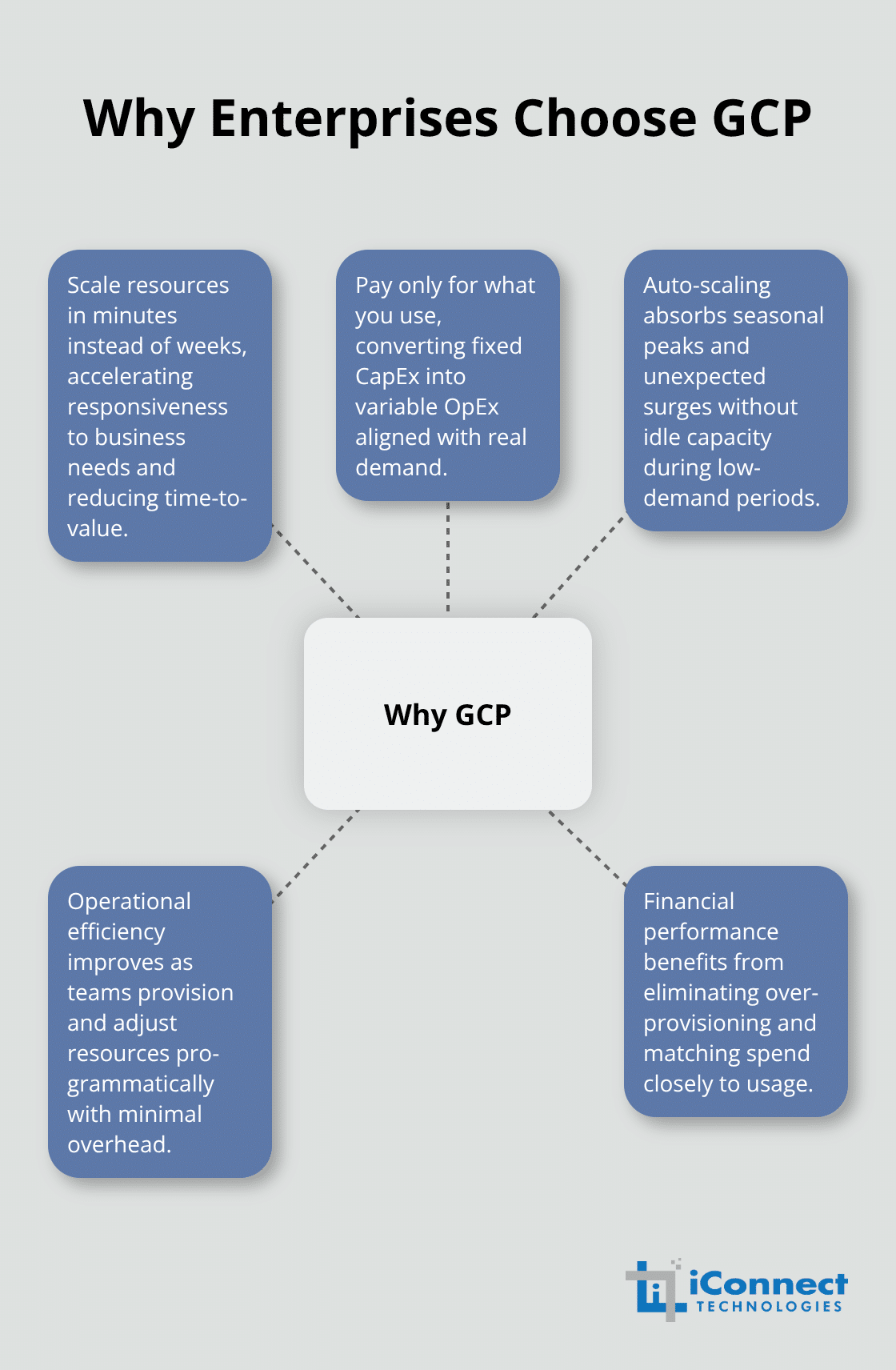
Google Cloud Platform delivers tangible advantages that directly impact enterprise operations and financial performance. Scalability stands as the primary driver, with GCP’s infrastructure handling traffic spikes and data growth without requiring infrastructure redesign. Organizations migrating to GCP report the ability to scale resources in minutes rather than weeks, eliminating the capital expenditure burden of over-provisioning on-premises systems. The platform’s auto-scaling capabilities mean enterprises pay only for consumed resources, converting fixed infrastructure costs into variable operating expenses that align with actual demand. This flexibility proves especially valuable during seasonal peaks or unexpected growth phases, where traditional infrastructure would sit idle during low-demand periods.
Real Cost Control During Migration
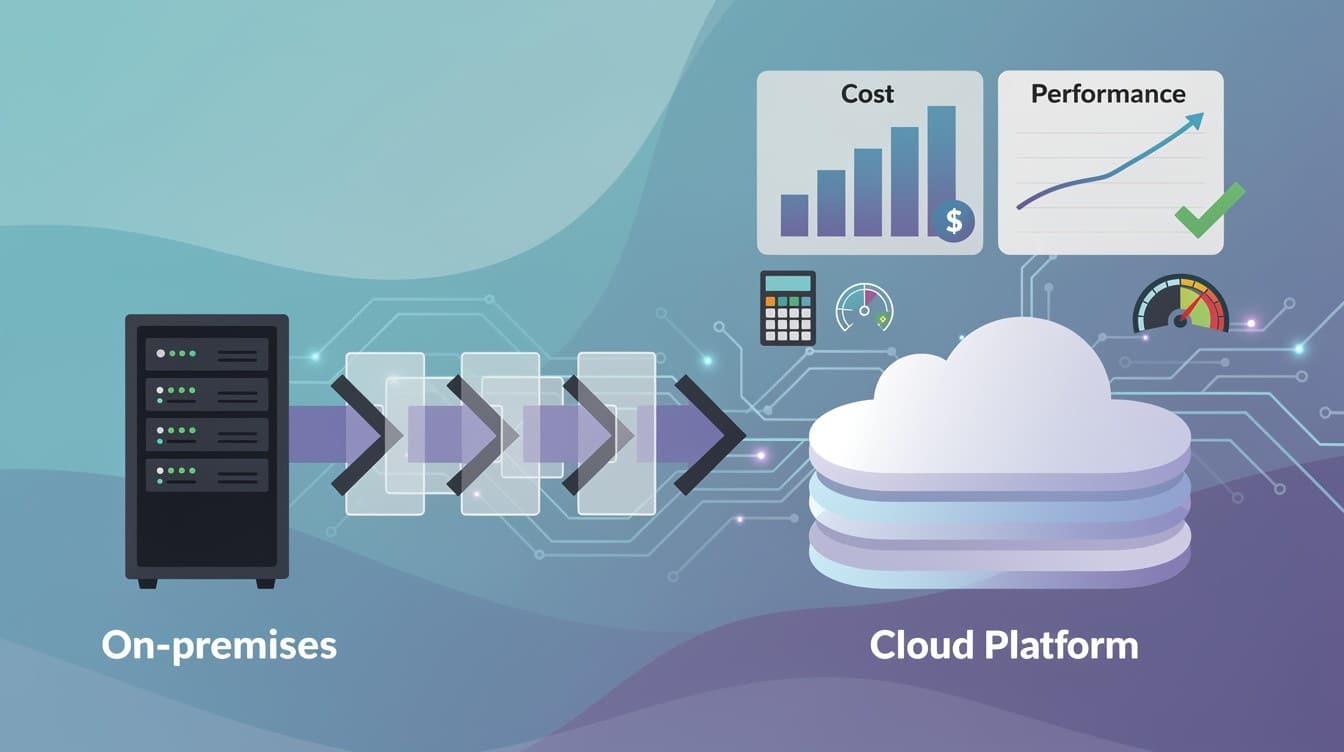
Cost efficiency extends beyond simple pay-as-you-go pricing. GCP’s commitment discounts and sustained-use discounts help reduce costs on predictable workloads, while the platform’s native cost management tools provide granular visibility into spending patterns. Enterprises gain immediate insight into which applications consume resources inefficiently, enabling targeted optimization rather than enterprise-wide guessing. The elimination of data center maintenance, hardware refresh cycles, and redundant infrastructure investments compounds these savings over time.
Security and Compliance Built In
Security and compliance capabilities represent another critical differentiator. GCP provides automatic encryption, continuous security monitoring, and compliance certifications including SOC 2, ISO 27001, and industry-specific standards like HIPAA and PCI-DSS without requiring enterprises to build these controls independently. This built-in security posture reduces the complexity and cost of maintaining compliance frameworks that legacy on-premises systems demand. The platform’s automated patching and security updates ensure enterprises access the latest threat protections immediately, eliminating the vulnerability windows that plague traditional infrastructure refresh cycles. For organizations handling sensitive data across multiple regions, GCP’s data residency options and transparent security practices address regulatory requirements that would otherwise demand extensive custom implementation and ongoing validation.
Moving Forward with Confidence
These advantages-scalability, cost control, and security-form the foundation for enterprise migration. Understanding how to leverage them requires a clear strategy and structured approach to assessment, planning, and execution.
How to Execute a Successful GCP Migration
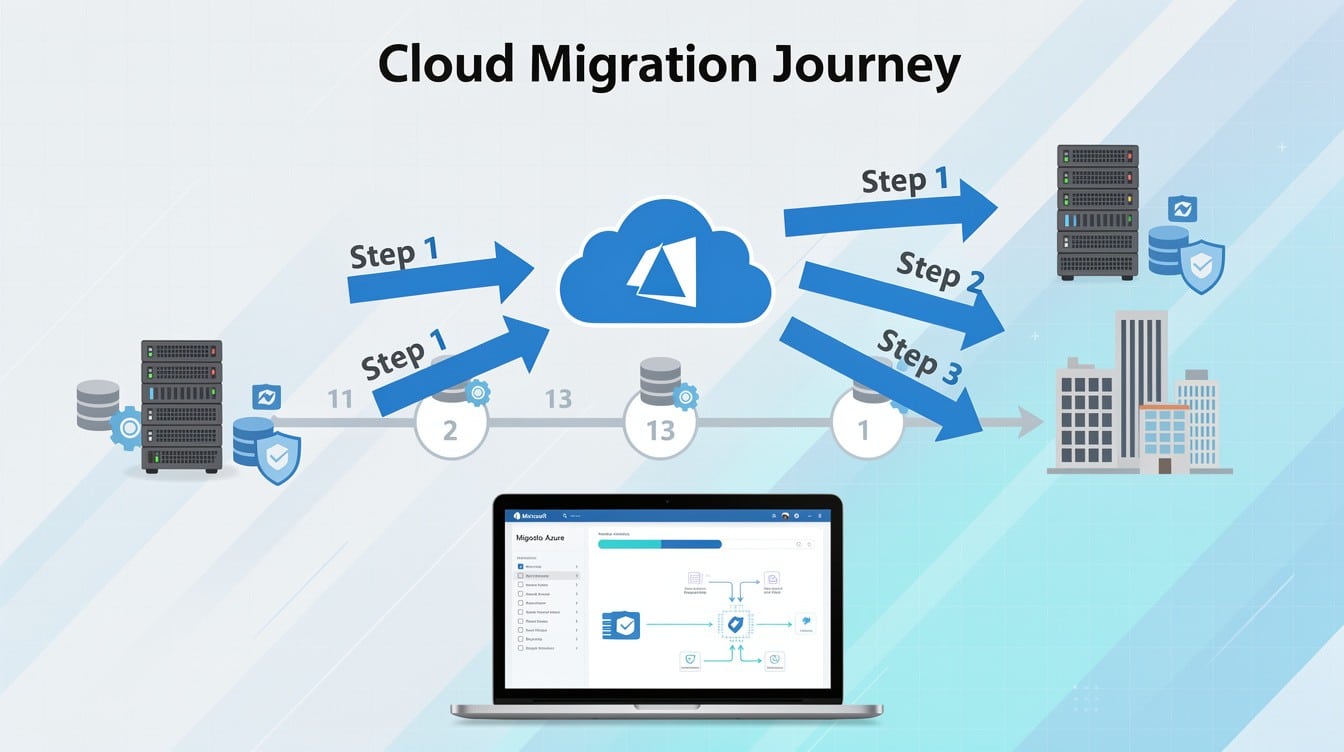
A successful GCP migration demands structured execution across three critical phases, each with specific outcomes that determine whether your enterprise realizes the promised scalability and cost benefits or encounters costly delays and performance degradation. The assessment phase establishes the foundation when you catalog existing infrastructure, identify dependencies, and determine which applications should move first.
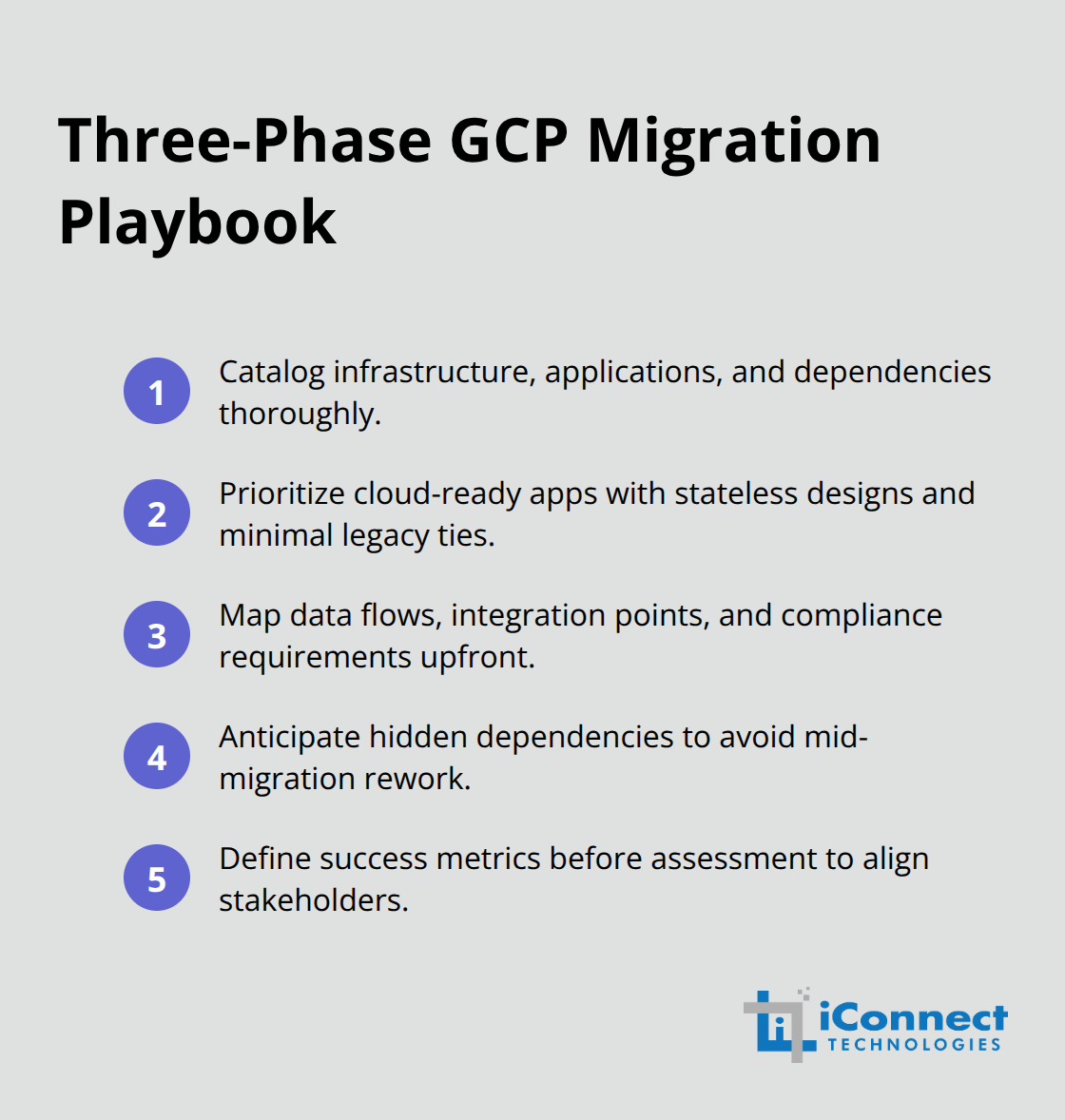
Rather than assessing everything simultaneously, prioritize applications with clear cloud-readiness indicators: stateless architectures, minimal legacy dependencies, and measurable performance bottlenecks on current infrastructure. Enterprises that conduct detailed discovery of data flows, integration points, and compliance requirements upfront avoid the scenario where hidden dependencies emerge mid-migration, forcing expensive rework and timeline extensions. Define success metrics before assessment starts-whether cost reduction targets, performance improvements, or compliance gains-so stakeholders align on what constitutes a successful outcome rather than debating objectives after technical work begins.
Sequence Migrations for Momentum
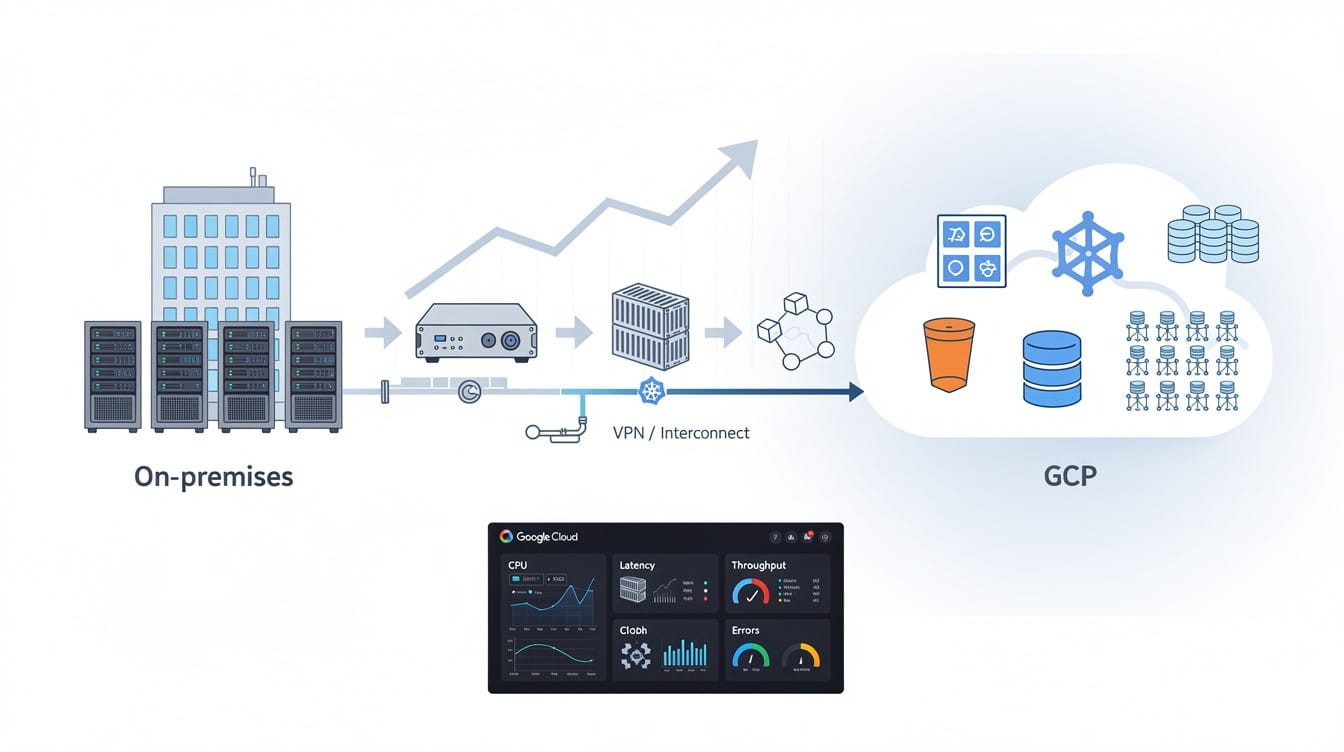
The migration sequence itself determines risk exposure and team confidence. Start with non-critical applications that demonstrate cloud benefits quickly, building organizational confidence and team expertise before you tackle mission-critical systems. This approach lets your teams master GCP’s operational patterns, security controls, and cost management tools on lower-stakes workloads. Applications requiring significant modernization-moving from monolithic architectures to microservices or adopting managed databases-should follow successful lift-and-shift migrations rather than precede them. Data migration requires meticulous planning around cutover windows, validation procedures, and rollback capabilities. Establish automated monitoring and alerting immediately after migration completion to catch performance regressions, cost anomalies, or security issues within hours rather than days, preventing small problems from cascading into major incidents.
Develop Internal Cloud Expertise
Organizations frequently falter post-migration because teams lack familiarity with GCP’s operational model, cost optimization features, and security practices. Assign dedicated engineers to comprehensive training on GCP services relevant to your workloads-whether BigQuery for analytics, GKE for containerized applications, or Cloud AI for machine learning initiatives. Cloud migrations succeed when internal teams own ongoing optimization rather than treating the platform as a static target achieved at go-live. Establish clear ownership of cost management, assigning someone responsibility for reviewing spending patterns monthly and implementing optimization recommendations. Security responsibility must explicitly shift from perimeter-focused on-premises thinking to identity-based and encryption-first cloud practices. Teams accustomed to managing infrastructure through ticketing systems need retraining on infrastructure-as-code approaches that GCP enables, reducing both human error and operational toil significantly.
Address the Skills and Staffing Challenge
The gap between current team capabilities and GCP operational requirements often determines whether migrations deliver expected outcomes or stall during execution. Enterprises that partner with experienced cloud migration providers accelerate capability development while reducing execution risk during the transition period. External expertise complements internal teams by providing proven migration playbooks, specialized knowledge of GCP services, and hands-on support during critical phases like data cutover and post-migration optimization. This partnership model allows your internal teams to focus on business continuity while external resources handle complex technical work, then transfer knowledge systematically so your organization maintains long-term ownership of the cloud environment. The combination of internal commitment and external expertise creates the conditions where migrations succeed on schedule and within budget, positioning your enterprise to address the operational and strategic challenges that emerge after go-live.
Common Challenges and How to Overcome Them
Enterprise GCP migrations stumble not because the technology fails, but because organizations underestimate the friction between legacy operations and cloud-native practices. Legacy systems integration presents the most deceptive challenge because the technical work appears straightforward until you encounter undocumented dependencies, custom data formats, and integration points that exist nowhere in official architecture diagrams.
Uncovering Hidden System Dependencies
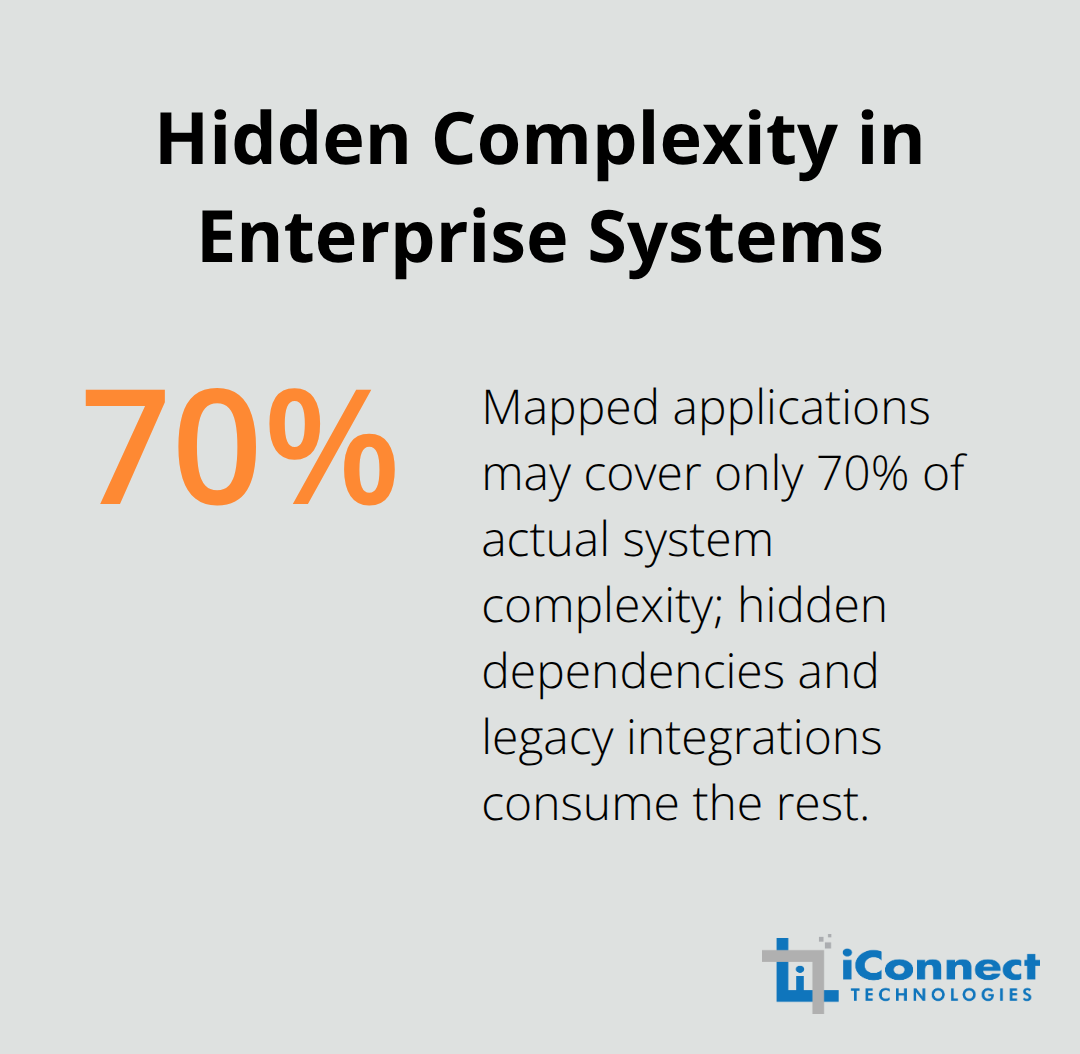
A financial services firm migrating core trading systems discovered that critical data flows relied on 47 custom scripts written over 15 years, with original authors long departed and no current documentation. The migration team spent six weeks reverse-engineering these scripts before they could safely transition data pipelines to GCP. This scenario repeats across enterprises: the applications you map during assessment represent perhaps 70 percent of actual system complexity, while hidden dependencies, batch processes, and legacy integrations consume the remaining effort.
Start your integration planning by interviewing application owners and database administrators separately, then compare their accounts of how systems communicate. Discrepancies between what documentation claims and what teams actually do reveal where common obstacles hide. Assign someone to physically trace data flows in your production environment rather than trusting diagrams. Run parallel systems for two to four weeks after migration cutover, validating that GCP-based applications produce identical outputs to legacy systems before you retire on-premises infrastructure. This overlap costs money in duplicate licensing and compute, but costs far less than discovering integration failures after you decommission legacy systems.
Managing Cutover Windows and Rollback Risk
Downtime during migration kills enterprise projects more reliably than technical failures. Organizations that minimize cutover windows to four hours often experience cascading failures because insufficient time exists for proper validation, rollback procedures, or team coordination across time zones. A more realistic approach accepts that critical systems require 12 to 24 hour migration windows, scheduled during low-transaction periods when business impact remains manageable.
Establish automated monitoring and alerting that triggers within 15 minutes of migration completion, catching performance regressions before they affect users. Set explicit rollback decision points: if data validation fails at the 30-minute mark post-cutover, you execute rollback immediately rather than attempting fixes in production. Document rollback procedures with step-by-step instructions and assign specific people to each step, because during actual incidents, ambiguity about who does what creates dangerous delays.
Building Organizational Cloud Expertise
Team competency represents the final obstacle, and it demands aggressive, focused action. GCP’s breadth means your team cannot master everything, so prioritize ruthlessly: if you migrate to GCP for BigQuery analytics, your data engineers need deep BigQuery expertise, while your infrastructure team needs GKE fundamentals only. Assign one engineer per critical service area to become the organizational expert through formal Google Cloud certification, hands-on labs, and participation in Google Cloud community forums. This creates a knowledge hub that prevents your organization from depending entirely on external consultants for ongoing optimization and troubleshooting.
Enterprises that treat post-migration training as optional discover that teams lack confidence in GCP’s cost management tools, security practices, and operational procedures, resulting in missed optimization opportunities worth 15 to 30 percent of cloud spending. External partners can accelerate capability development while your internal teams focus on business continuity during the transition period, then systematically transfer knowledge so your organization maintains long-term ownership of the cloud environment.
Final Thoughts
GCP migration for enterprises succeeds when organizations treat cloud adoption as a business transformation rather than a purely technical project. The foundation you establish during assessment and planning determines whether your enterprise captures the scalability, cost efficiency, and security advantages that make migration worthwhile. Enterprises that prioritize internal team development alongside external expertise position themselves to optimize cloud spending continuously, implement security practices that evolve with emerging threats, and maintain the operational confidence necessary for long-term success.
Your organization gains the flexibility to scale resources in response to actual demand rather than anticipated capacity, converting infrastructure costs from fixed investments into variable expenses aligned with business performance. Real-time collaboration capabilities enable distributed teams to work across time zones without the friction that on-premises infrastructure imposes, accelerating decision-making and reducing time-to-market for new capabilities. Automatic security updates and compliance certifications eliminate the vulnerability windows that plague traditional infrastructure, while built-in redundancy and rapid recovery capabilities strengthen business continuity without requiring expensive custom implementation.
Enterprise leaders should assess current infrastructure and identify applications that demonstrate clear cloud-readiness indicators, then establish success metrics that align stakeholders around measurable outcomes. Assign dedicated ownership of cloud optimization, security practices, and team development rather than treating these as secondary concerns after go-live. Schedule a discovery conversation with your cloud migration partner to evaluate your organization’s readiness and develop a realistic timeline that accounts for your specific infrastructure complexity and team capabilities.