Moving your business to the cloud shouldn’t mean navigating the transition alone. Many Philippine companies face real obstacles when modernizing their IT infrastructure, from legacy system compatibility to skill gaps that slow progress.
Azure cloud migration in the Philippines is increasingly accessible with the right local support. When you partner with experts who understand your market and infrastructure, you gain a clear path forward that minimizes disruption and maximizes your investment.
Why Azure Migration Makes Financial and Operational Sense
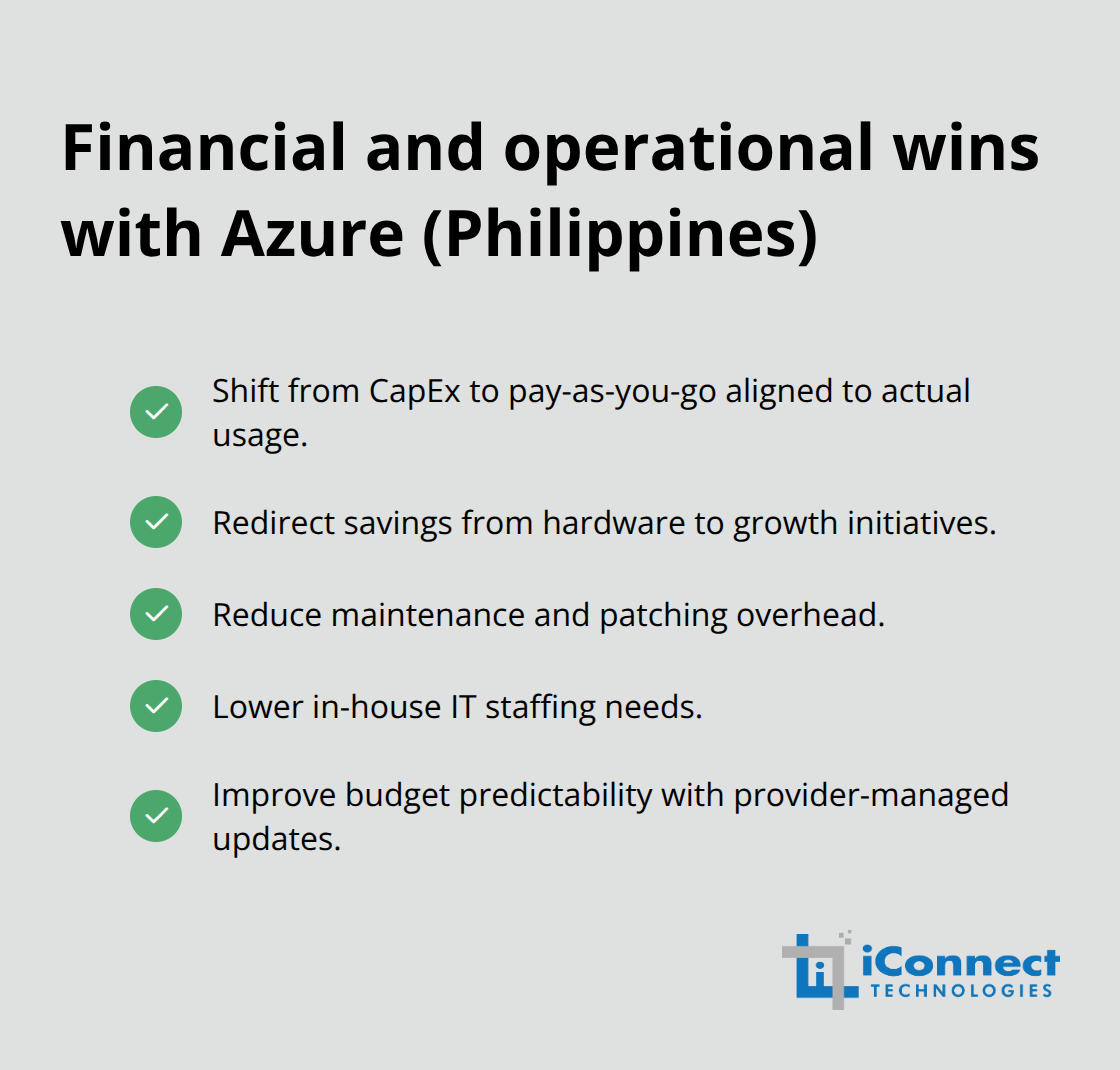
Azure cloud migration fundamentally shifts how Philippine businesses manage their IT spending. Rather than purchasing expensive servers, networking equipment, and storage infrastructure upfront, companies transition to a pay-as-you-go model where costs align directly with actual usage. This flexibility matters tremendously for small to mid-sized enterprises operating on tight budgets. Microsoft Azure’s on-demand licensing approach eliminates large capital expenditures, allowing businesses to redirect funds toward growth initiatives instead of depreciating hardware. The operational expense reduction extends beyond hardware elimination. Cloud-based infrastructure requires significantly fewer in-house IT staff members dedicated to maintenance, patching, and infrastructure management. Philippine organizations report lower ongoing staffing costs and improved budget predictability when moving from on-premises systems to Azure, since cloud providers handle routine maintenance and infrastructure updates automatically.
Security and Compliance Without the Heavy Lifting
Philippine businesses operating in regulated industries face mounting pressure to meet data protection standards. Azure Storage Service Encryption automatically encrypts your data when it’s persisted to the cloud, eliminating manual encryption configurations that drain IT resources. Microsoft’s security infrastructure includes dedicated teams, advanced firewalls, and intrusion detection systems that most Philippine companies cannot replicate internally. Disaster recovery and automated backup services across multiple global regions ensure business continuity without requiring expensive redundant on-premises systems. Azure’s data sovereignty options allow organizations to store information in regions closest to the Philippines, meeting local compliance requirements while maintaining low latency for end users. This regional flexibility addresses a critical concern for Philippine enterprises managing sensitive customer or financial data. The platform’s audit trail capabilities and governance tools simplify compliance reporting for local tax requirements and regulatory frameworks specific to Philippine operations.
Scaling Operations Without Infrastructure Constraints
Growth in Philippine markets often happens unpredictably, and traditional on-premises infrastructure cannot adapt quickly. Azure enables vertical scaling through added processing power to existing servers, or horizontal scaling through deployment of additional instances across cloud resources. Right-sizing of virtual machines and workloads remains a core practice during Azure migrations, ensuring organizations maximize performance per peso spent while avoiding wasteful over-provisioning. Cloud scalability means adding new users, expanding storage, or increasing computing capacity takes hours rather than weeks. This responsiveness directly impacts competitive advantage, particularly for Philippine companies competing in fast-moving industries. Real-time data access enabled through Azure’s analytics and reporting capabilities supports faster decision-making across finance, sales, and supply chain functions, helping businesses identify market opportunities and respond to customer demands with greater agility than competitors still managing legacy systems.
These financial, security, and operational advantages create a compelling case for migration-yet the path forward requires careful planning and expert guidance. The next section explores the real obstacles that Philippine organizations encounter during cloud transitions and how to navigate them effectively.
Common Challenges in Azure Migration Projects
Most Philippine organizations underestimate the technical friction embedded in their existing systems. Legacy applications running on outdated databases often lack proper documentation, making it difficult to understand data dependencies before migration starts. When Universal Robina Corporation modernized their supply chain reporting on Azure, they faced the reality that data lived scattered across multiple disconnected systems-spreadsheets, older ERP modules, and custom databases with no unified schema. Consolidating this data into Azure Data Lake Storage required careful mapping of each data source, validation of historical records, and reconciliation of conflicting information across systems. The complexity intensifies when Philippine companies operate with minimal IT documentation, a common scenario in organizations that have grown organically without formal change management processes. Data transfer itself becomes a bottleneck; moving terabytes of production data across limited bandwidth connections while keeping systems operational demands specialized tools and careful scheduling. Many businesses discover mid-migration that their data quality is far worse than anticipated-duplicate records, inconsistent formatting, missing values-forcing teams to pause and remediate before proceeding. The temptation to rush this phase directly causes downstream failures where applications malfunction due to incomplete or corrupted data transfers.
Legacy Systems Create Hidden Obstacles
Philippine organizations often discover that their existing infrastructure contains undocumented dependencies and outdated architectures that resist modernization. Applications built decades ago may rely on databases no longer supported by vendors, or they may contain custom code that no one fully understands. These systems cannot simply move to the cloud unchanged; they require assessment, refactoring, and sometimes complete replacement. The cost and timeline for addressing these obstacles often exceeds initial estimates, catching business leaders off guard. Teams must invest time in understanding what actually exists before they can plan a realistic migration path forward.
Downtime Fears Drive Poor Migration Decisions
Philippine business owners often resist cloud migration because they assume it requires shutting down operations for days or weeks. This fear pushes organizations toward incomplete hybrid approaches that leave them stuck between two worlds, paying for both on-premises infrastructure and cloud services without gaining full benefits from either. The reality is that well-planned migrations minimize downtime to hours rather than days, but only when executed with precision and proper staging. Phased cutover strategies allow critical systems to transition during low-traffic windows while maintaining fallback capabilities. A robust Azure migration plan includes detailed setup procedures, preventive maintenance protocols, and storage and network management before the actual transition occurs-not during it. Post-migration monitoring must detect issues within minutes, not hours, so technical teams can rollback or resolve problems before customers experience service degradation. Philippine organizations that skip this monitoring infrastructure discover problems only when customers report failures, which destroys trust and revenue. The second critical mistake occurs when businesses underestimate the complexity of their application dependencies. A sales system might depend on inventory data, which depends on procurement systems, which depend on supplier integrations. Moving one application without coordinating the others creates cascading failures that force expensive emergency support calls and damage business reputation.
The Skills Gap Nobody Wants to Admit
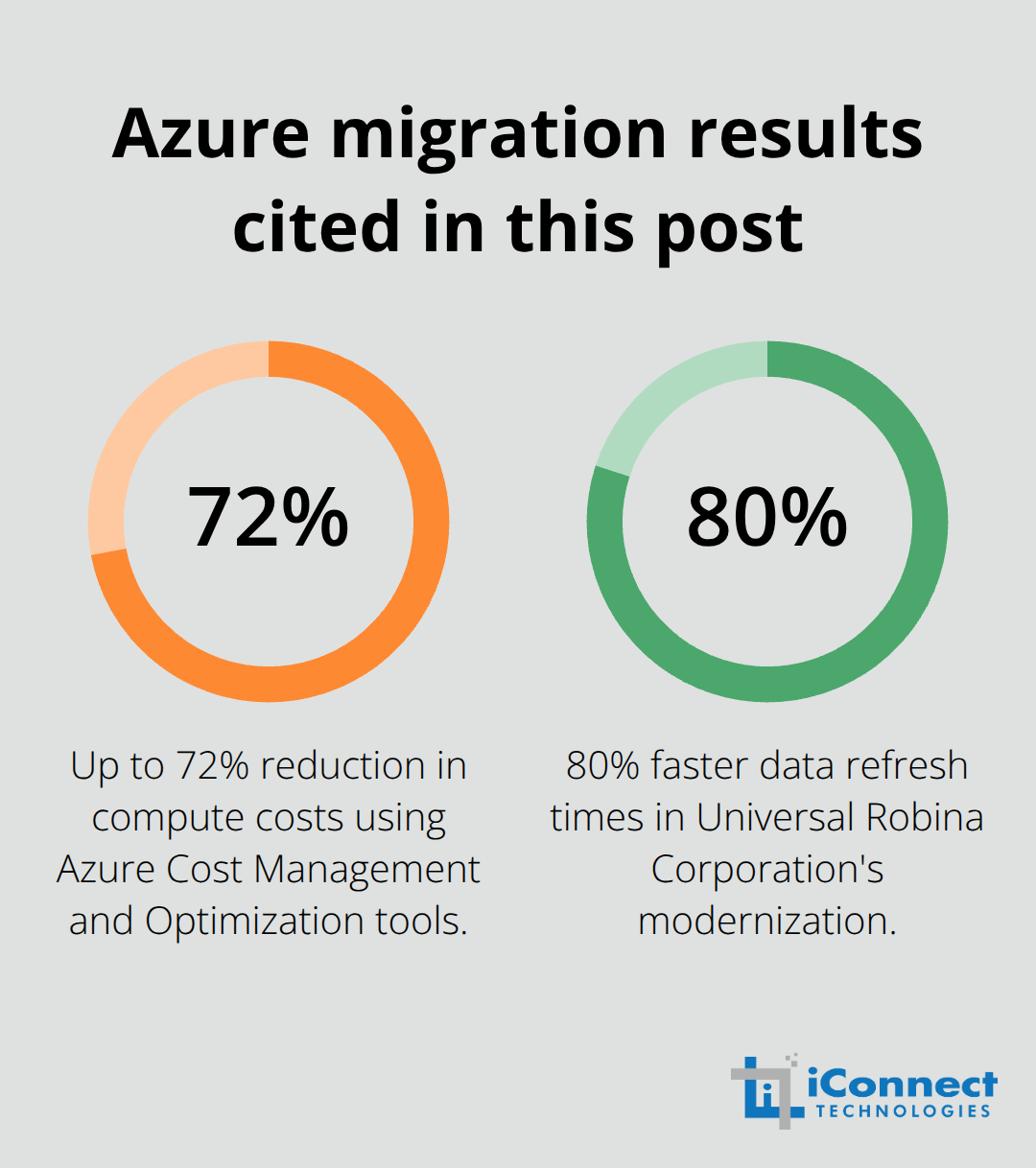
Many Philippine IT teams lack hands-on Azure experience, yet leadership expects them to manage the migration independently. This gap between capability and expectation creates dangerous situations where migration decisions get made by people unfamiliar with Azure’s architecture, cost management tools, and operational best practices. Right-sizing virtual machines during migration directly impacts monthly spending. Azure Cost Management and Optimization tools can reduce compute costs up to 72 percent on pay-as-you-go prices, but they require expertise to configure and interpret correctly. Philippine teams cannot develop this expertise quickly enough to guide a migration safely. The skill shortage extends beyond technical implementation into governance and security. Azure’s security features like network segmentation, identity management, and threat detection require configuration decisions that directly impact whether your data remains protected or becomes vulnerable. Attempting to learn these concepts while simultaneously executing a production migration guarantees mistakes. Organizations that hire Azure-certified consultants during migration phases complete projects 40 to 60 percent faster with significantly fewer post-migration issues requiring expensive remediation. This investment in external expertise typically pays for itself within the first year through avoided downtime, reduced cloud spending, and faster time to value.
These obstacles explain why many Philippine businesses stall their migration efforts or experience costly failures. The path forward requires more than technical knowledge-it demands local expertise that understands both Azure’s capabilities and the realities of Philippine business environments. The next section reveals how the right partnership transforms these challenges into manageable steps toward successful cloud transformation.
Local Azure Migration Support and Best Practices
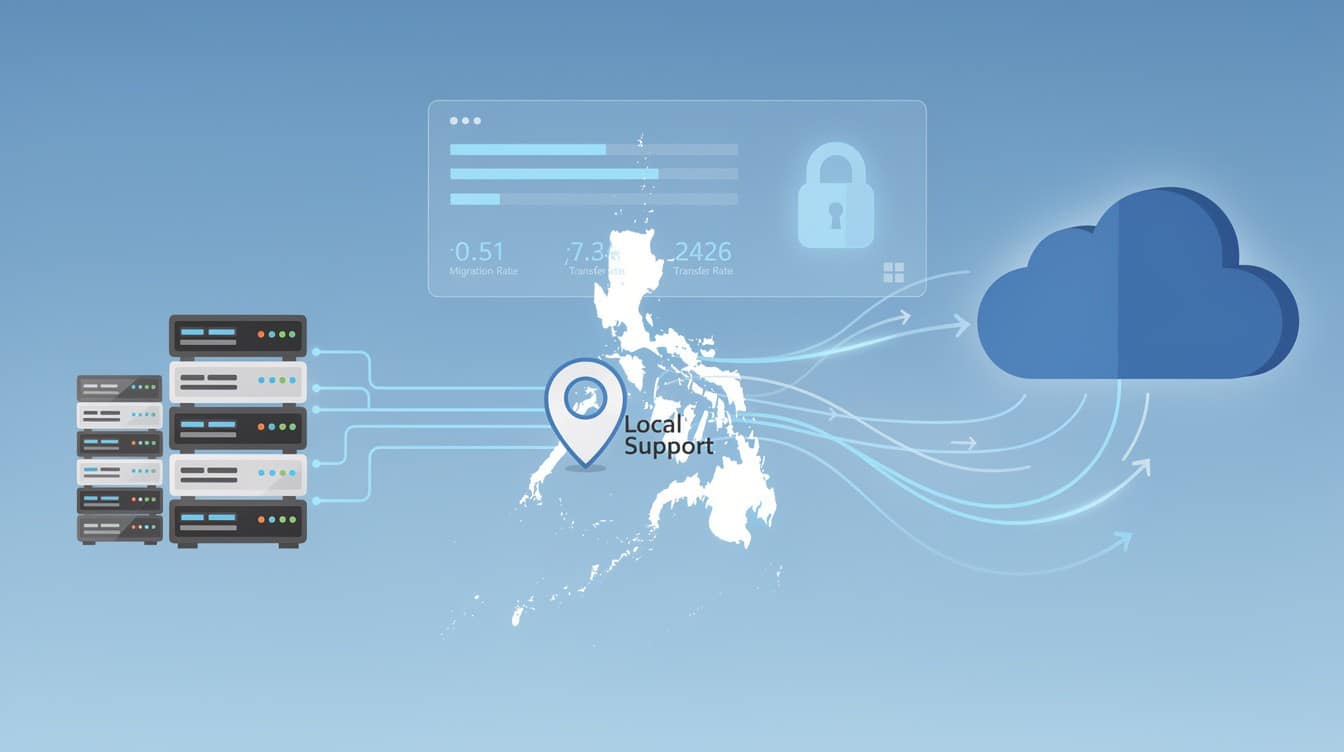
The most expensive mistake Philippine businesses make is treating Azure migration as an IT project rather than a business transformation requiring specialized expertise. Your internal IT team, no matter how capable, likely lacks hands-on experience with Azure’s specific architecture, cost optimization patterns, and Philippine compliance requirements. A local Azure migration partner brings three critical advantages that internal teams cannot replicate quickly enough: they have executed dozens of migrations across Philippine industries, they understand the local regulatory landscape including BIR CAS tax module integrations, and they carry certified Azure expertise that would take your team months or years to develop. A Philippines-based managed services provider combines 24/7 support with migration-specific expertise that accelerates timelines while reducing costly mistakes. The partnership model works because migration partners assume responsibility for outcomes, not just recommendations.
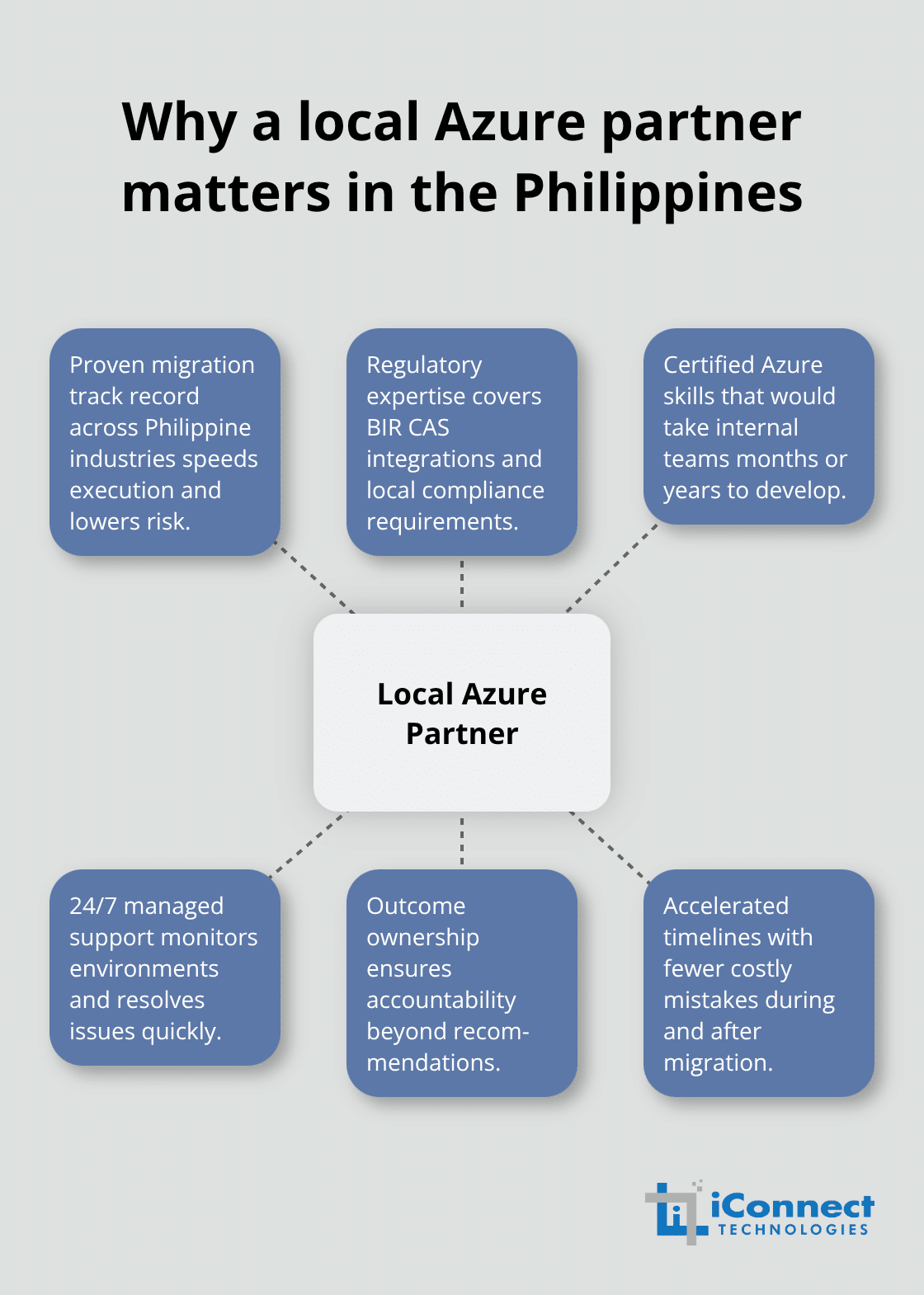
When your internal team leads migration alone and something fails, you own the consequences. When a certified partner leads the process, they have financial incentive to execute flawlessly and provide post-migration support that keeps systems running smoothly.
Structure Migrations in Discrete Phases Rather Than Big Bangs
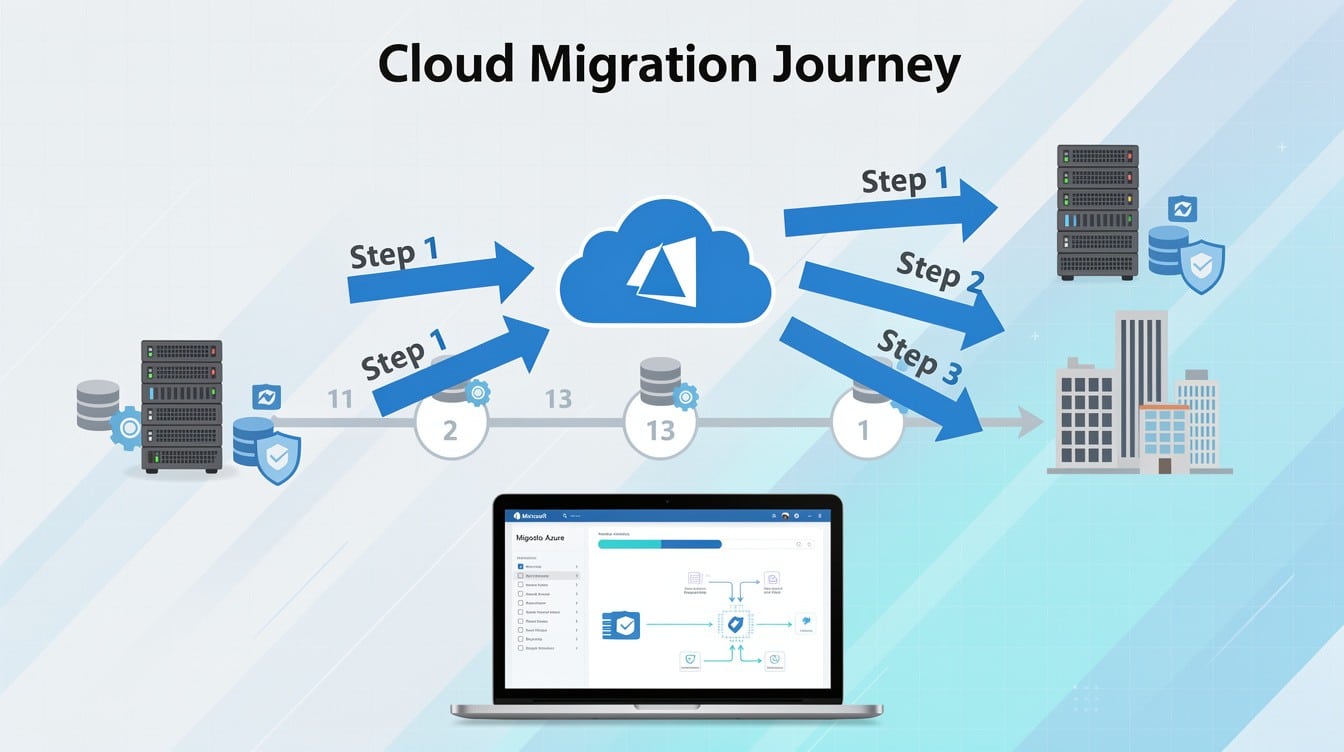
Phased migration approaches reduce risk dramatically compared to attempting full cutover in a single weekend. The Universal Robina Corporation example demonstrates how staged modernization works in practice: they did not move their entire supply chain reporting infrastructure at once. Instead, they centralized data into Azure Data Lake Storage first, built the new analytics pipeline using Azure Data Factory and Databricks in parallel with existing systems, validated output against legacy reports, then switched traffic to the new platform once confidence reached 100 percent. This approach meant zero downtime despite completely replacing their reporting architecture. Philippine companies should follow similar patterns by moving non-critical systems first, validating cloud operations for 2-4 weeks, then progressively moving critical applications once teams gain confidence with Azure’s operational model. A robust phased plan includes preventive maintenance setup before any data moves, network and storage configuration validated in isolation, security controls tested thoroughly, and automated monitoring deployed before production cutover occurs. The timeline extends from weeks to months, but the reduction in emergency support calls and post-migration fixes more than justifies the additional planning time. Teams that attempt rapid migration without proper staging consistently discover that applications behave differently in the cloud than on-premises due to latency differences, network configuration nuances, or security policies blocking expected traffic patterns.
Optimize Costs Immediately After Go-Live
Organizations that declare victory on migration go-live day typically waste 30-40 percent of their cloud investment through inefficient configurations and underutilized resources. Azure Cost Management tools reveal that most Philippine companies initially provision virtual machines 2-3 times larger than actual workload requirements demand, creating unnecessary monthly spending. Right-sizing begins immediately after go-live by monitoring actual CPU, memory, and network utilization for 2-4 weeks, then adjusting instance types downward to match real consumption patterns. This single practice typically reduces compute costs by 20-35 percent without impacting performance. Try to establish cost optimization as a continuous discipline rather than a one-time activity. Most Philippine organizations discover that their cloud spending grows 15-20 percent monthly if left unmanaged because teams provision additional resources for testing, create duplicate environments by accident, or forget to delete temporary resources. A managed services provider handles this monitoring continuously, detecting anomalies within minutes and optimizing configurations based on actual usage patterns rather than assumptions.
Maintain Security and Performance Through Continuous Monitoring
Post-migration support extends far beyond cost optimization into security posture management. Monthly vulnerability assessments, malware scanning, and threat detection ensure that your cloud environment remains secure as threats evolve. Quarterly business reviews with your migration partner should analyze performance metrics, spending trends, and architectural improvements, creating accountability for cloud value delivery rather than treating the cloud as a set-and-forget infrastructure upgrade. Ongoing monitoring must track application performance, security threats, and cost trends continuously. The partnership model ensures that someone with Azure expertise reviews your environment regularly, identifies optimization opportunities, and implements improvements before problems impact your business operations.
Conclusion
Azure cloud migration in the Philippines succeeds when you partner with experts who understand both Azure’s technical architecture and your local market environment. The financial benefits prove substantial: reduced infrastructure costs, lower staffing requirements, and predictable operational expenses that free capital for business growth. Security and compliance become manageable through automated encryption, disaster recovery, and regional data sovereignty options that meet Philippine regulatory requirements, while scalability enables your organization to respond to market opportunities without waiting weeks for hardware procurement.
These benefits materialize only when migration planning accounts for legacy system complexity, minimizes operational disruption, and addresses the skills gap that derails most projects. The Universal Robina Corporation case demonstrates that phased approaches deliver measurable results: their supply chain reporting modernization achieved 80 percent faster data refresh times and near real-time decision-making capability without requiring business shutdown. This outcome required partnership with experts who understood both Azure’s capabilities and Philippine business operations.
Your next step is to engage a Philippines-based Azure managed services partner who can conduct a pre-migration assessment of your current infrastructure, applications, and data dependencies. This evaluation typically takes 2-4 weeks and costs significantly less than attempting migration without proper planning, and it reveals the true scope of legacy system challenges before you commit resources. Schedule a consultation with local Azure experts who will provide transparent recommendations and commit to post-migration support that ensures your organization captures full value from the investment.