Your IT infrastructure is the backbone of your business. When systems fail unexpectedly, productivity stops and costs mount quickly.
Proactive managed IT support shifts this dynamic by catching problems before they impact your operations. Rather than waiting for issues to disrupt your day, continuous monitoring and preventive maintenance keep your systems running smoothly and your team focused on growth.
What Is Proactive Managed IT Support
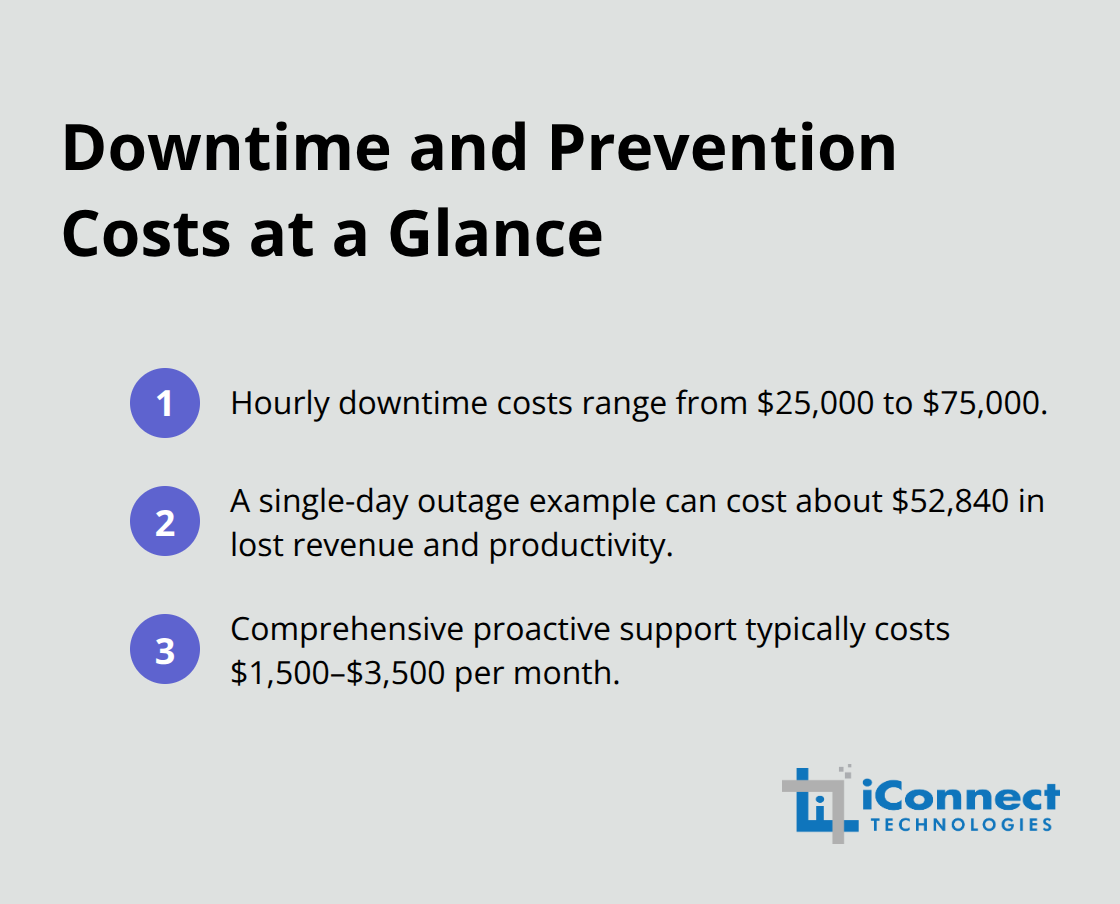
Proactive managed IT support fundamentally differs from the reactive break-fix model that most small businesses default to. Instead of calling for help when something breaks, you have a dedicated team monitoring your systems 24/7, identifying risks before they materialize into costly outages. This shift matters because downtime costs are staggering. According to ITIC’s 2024 research, hourly downtime costs range from $25,000 to $75,000 depending on business size and industry. For a $10 million revenue company with 50 employees losing a single day of uptime, combined revenue and productivity losses alone approach $52,840, before factoring in recovery expenses or reputational damage.
Proactive support prevents these scenarios through continuous infrastructure assessment, automated threat detection, and scheduled maintenance windows that eliminate surprises. Your systems receive regular updates, patches deploy within the critical 72-hour window that separates secured networks from compromised ones, and vulnerabilities surface during routine scans rather than during a breach. The difference is operational clarity: predictable monthly costs replace unpredictable emergency spending, and your team stays productive instead of troubleshooting failures.
How Continuous Monitoring Catches Problems Early
Real-time monitoring detects performance degradation, security anomalies, and hardware stress signals long before they trigger outages. Managed IT providers deploy tools that watch CPU usage, disk capacity, network traffic patterns, and security event logs simultaneously across all your devices. When a server’s disk reaches 85% capacity, the system flags it for expansion before data writes fail. When unusual login attempts appear across multiple accounts, alerts trigger instantly rather than waiting for a ransomware payload to encrypt your files. This early detection approach addresses the reality that security issues represent a significant source of downtime, making prevention vastly cheaper than incident response. Scheduled maintenance happens during off-hours or planned windows, not during your peak business periods when outages cause maximum damage. Backup integrity gets tested weekly rather than discovered as broken during an actual recovery scenario.
Why 24/7 Support Transforms Your Response Capability
Small businesses cannot afford dedicated IT staff working round-the-clock, yet threats and failures ignore business hours. A managed IT provider with 24/7 support means issues detected at 2 AM receive immediate attention instead of waiting until morning. Critical security incidents receive expert response within minutes, not hours. Hardware failures trigger immediate troubleshooting and parts procurement rather than a delayed Monday morning ticket. This continuous availability directly reduces mean time to resolution, keeping downtime measured in minutes rather than hours or days. For organizations where every minute of outage costs thousands, this capability alone justifies the service investment.
What Separates Proactive from Reactive IT
The reactive approach waits for failures to occur before addressing them, leading to sudden disruptions and unpredictable costs. Reactive support often results in band-aid fixes rather than addressing root causes of IT problems. Downtime happens during your busiest periods, and recovery takes longer because problems surface after they already impact operations. Proactive managed IT inverts this model entirely. Your provider identifies weak points before they fail, schedules updates and maintenance ahead of demand, and maintains systems that stay current and secure. This preventive discipline means your infrastructure supports business growth instead of constraining it, setting the stage for the strategic planning and optimization that transforms IT from a cost center into a competitive advantage.
Real Business Impact: What Proactive IT Actually Saves
The True Cost of Downtime
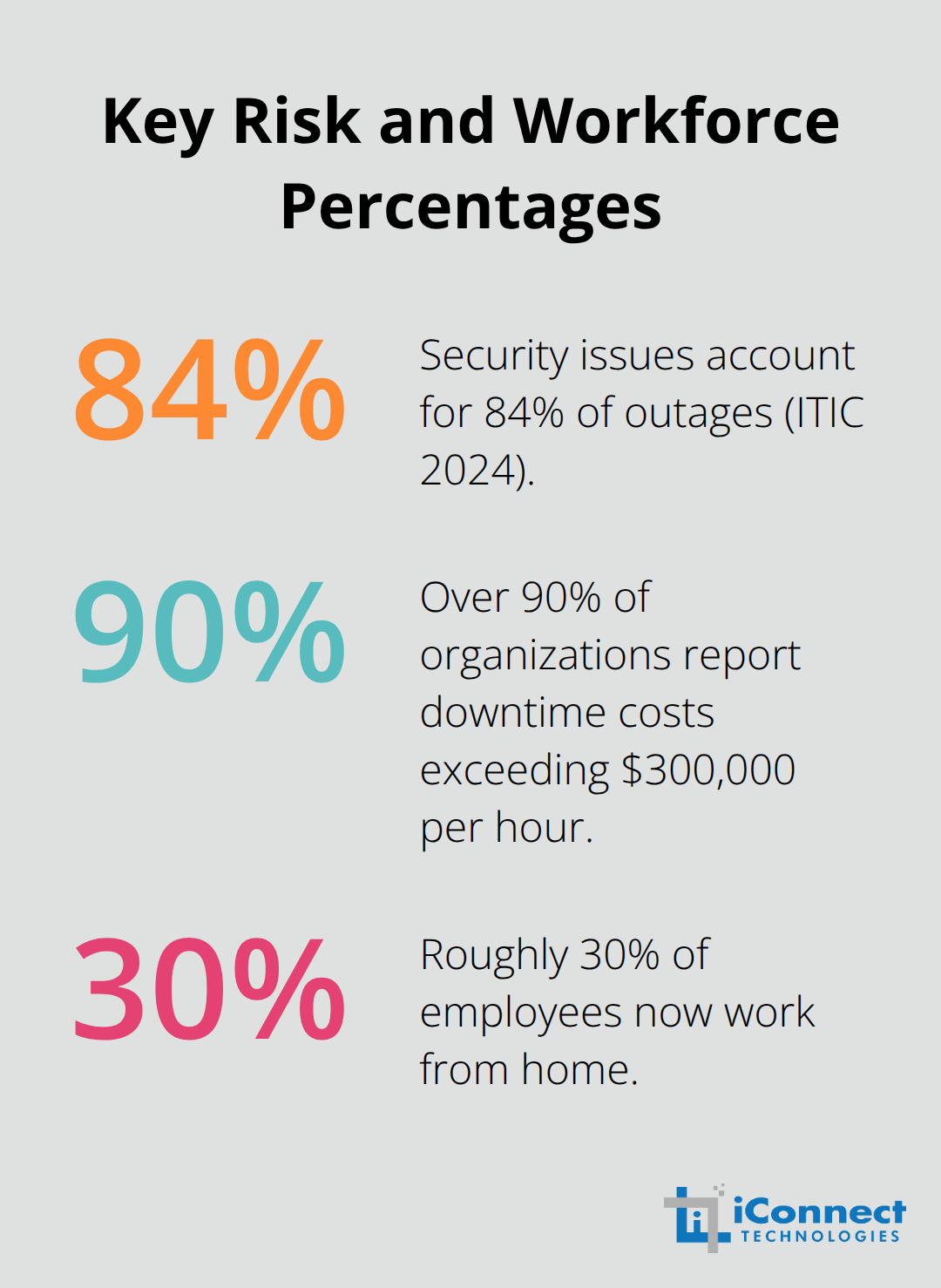
Proactive managed IT support delivers measurable financial and operational returns that directly affect your bottom line. The math is straightforward: a single unplanned outage costs far more than proactive prevention. According to ITIC’s 2024 research, the average hourly cost of downtime ranges from $25,000 to $75,000 depending on business size and industry, with over 90% of organizations reporting costs exceeding $300,000 per hour. For small businesses, this creates immediate vulnerability. A company with $10 million in annual revenue and 50 employees losing just eight hours of uptime faces approximately $52,840 in combined revenue and productivity losses alone, before accounting for recovery costs or damage to customer relationships.
This reality makes the monthly cost of managed IT services look like insurance rather than expense. Most small businesses spend between $1,500 and $3,500 monthly on comprehensive proactive support, which prevents even a single major outage and pays for itself instantly. The financial case becomes even stronger when you consider that a significant share of SMBs cannot survive a breach or outage costing as little as $10,000, according to VikingCloud’s 2025 SMB Threat Landscape Report.
Predictable Budgeting Replaces Financial Chaos
Proactive monitoring eliminates the unpredictability that makes IT budgeting impossible. Reactive approaches force businesses to absorb surprise emergency expenses whenever systems fail, creating budget volatility that CFOs hate. Proactive managed IT replaces this chaos with fixed monthly costs you can forecast and plan around, transforming IT from an unpredictable liability into a manageable operational expense.
This shift matters because finance teams can allocate resources confidently instead of reserving emergency funds for IT disasters. Your annual budget reflects actual IT needs rather than worst-case scenarios. Predictable spending allows you to invest those savings into growth initiatives instead of holding capital in reserve for inevitable failures.
Security Threats Demand Proactive Defense
Small businesses face ransomware breaches at dramatically higher rates than enterprises. Security issues represent the leading cause of downtime according to ITIC’s 2024 analysis, accounting for 84% of outages. Proactive managed IT providers deploy continuous threat monitoring, automated patch deployment within the critical 72-hour window that separates secured networks from compromised ones, and security training that reduces human-factor risk.
This preventive approach costs a fraction of breach recovery, which averages tens of thousands of dollars even for small firms and can push businesses toward closure. Compliance readiness through proactive management means your organization meets GDPR, HIPAA, and PCI-DSS requirements without scrambling during audits or facing regulatory fines. Managed IT providers embed compliance checks into routine monitoring, ensuring your systems maintain required standards continuously rather than requiring expensive retrofitting when auditors arrive.
Operational Advantages That Drive Growth
Businesses running on proactive IT infrastructure experience fewer disruptions to employee productivity, allowing teams to focus on revenue-generating work rather than troubleshooting failures. Cloud-based solutions deployed through proactive planning enable remote work and distributed team collaboration without sacrificing security or performance, addressing the reality that roughly 30% of employees now work from home according to Statista.
Regular infrastructure assessments identify optimization opportunities that reactive shops never discover, helping your technology scale efficiently as your business grows. Disaster recovery planning, embedded in proactive management, ensures your critical functions recover quickly if something does fail, minimizing the impact of inevitable incidents. A managed IT provider functioning as a virtual CIO delivers strategic technology planning aligned with your business goals, helping you avoid misaligned tech spending and ensuring every system supports your actual priorities rather than following industry trends.
These operational improvements set the foundation for understanding how proactive managed IT actually works in practice-the specific tools, processes, and strategies that transform your infrastructure from a source of constant worry into a reliable competitive advantage.
How Proactive Managed IT Actually Works
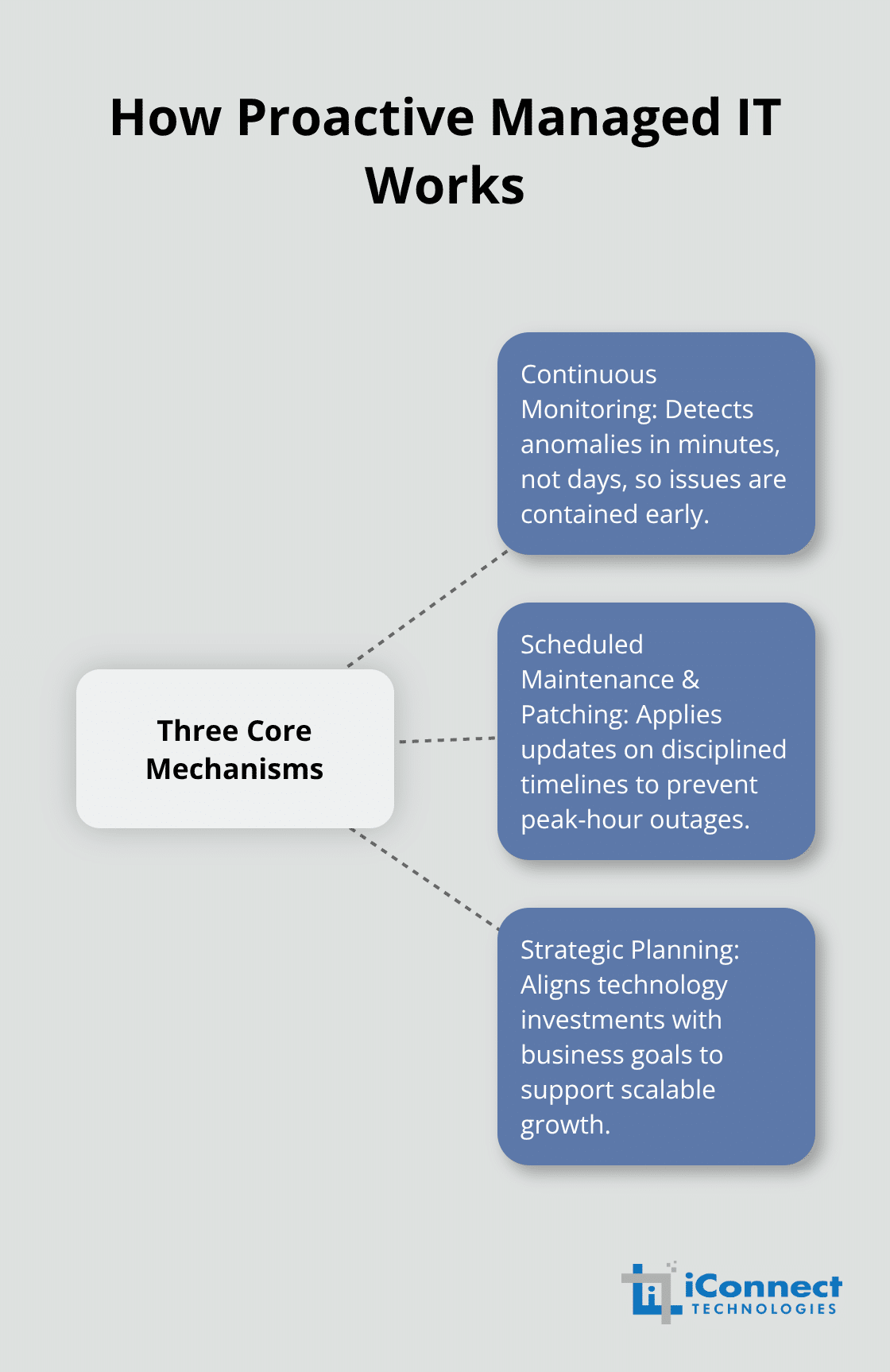
Proactive managed IT transforms from concept to reality through three interconnected mechanisms that operate simultaneously across your entire infrastructure. Each mechanism addresses a specific vulnerability in reactive IT approaches while building layers of protection that prevent most outages before they occur.
Continuous Network Monitoring Detects Threats in Real Time
Specialized software watches every connected device, server, and application continuously rather than capturing single snapshots during monthly scans. When a user account logs in from an unfamiliar geographic location at 3 AM, the system flags it immediately instead of waiting for a weekly report. When disk usage climbs toward capacity, alerts trigger automatically so your provider adds storage before applications fail. When network traffic patterns shift unexpectedly, it signals potential compromise or misconfiguration that requires investigation.
This constant surveillance catches security threats before they spread and identifies performance degradation before users notice slowdowns. Real-time threat detection means your team responds to problems within minutes rather than discovering them hours or days later when damage has already occurred. The difference between detecting a breach during its first hour versus its first week determines whether you contain it or face full-scale incident response and recovery costs.
Scheduled Maintenance and Patch Deployment Follow Disciplined Timelines
Managed IT providers deploy critical security patches within 24-72 hours, following schedules that avoid your peak business hours. Routine updates happen during planned maintenance windows you control, not during customer-facing operations when outages cause maximum damage. Backup integrity gets tested weekly through automated restoration processes that verify data actually recovers rather than discovering broken backups during genuine emergencies.
Hardware replacement happens based on predictive analytics that identify components approaching failure, not reactive replacements after systems crash. This disciplined approach eliminates the surprise emergency maintenance that disrupts operations and forces expensive overtime. Your infrastructure receives consistent care on a predictable schedule, much like vehicle maintenance prevents breakdowns rather than waiting for engine failure on a critical business trip.
Strategic Planning Aligns Technology with Business Goals
Your managed IT provider functions as an extension of your leadership team, conducting quarterly infrastructure reviews that identify optimization opportunities and recommend technology investments aligned with your actual business priorities. These assessments catch situations where your current infrastructure no longer matches your usage patterns, preventing expensive over-investment in unused capacity or dangerous under-investment in critical systems.
Cloud adoption happens through deliberate planning that maps your current applications to appropriate cloud services, tests migration procedures on non-critical systems first, and maintains compatibility with legacy systems you cannot immediately replace. Security training becomes embedded in proactive care rather than reactive damage control, with phishing simulations and compliance awareness programs running continuously to reduce human-factor risk. This strategic layer ensures your technology roadmap supports growth rather than constraining it, transforming IT from a cost center into a competitive advantage that scales with your business.
Final Thoughts
Proactive managed IT support transforms how small businesses handle technology infrastructure by preventing disruptions rather than absorbing their damage. Your team stays productive, your data remains secure, and your budget reflects predictable costs instead of emergency expenses. This preventive approach directly supports growth because your employees focus on revenue-generating work while your leadership team plans confidently around stable technology investments.
Start by documenting the outages you have experienced, the security concerns that worry you, and the budget surprises that frustrated your finance team. Share this reality with a managed IT provider who listens to your actual business needs rather than pushing generic solutions. A comprehensive infrastructure review identifies your specific vulnerabilities and maps a realistic path toward prevention, typically revealing opportunities to eliminate recurring problems at a fraction of their current cost.
Contact iConnect to discuss how proactive managed IT support can transform your infrastructure into a reliable competitive advantage. We combine continuous monitoring, strategic planning, and expert support to keep your systems running while you focus on growing your business. Let us function as an extension of your leadership team and help you move from reactive firefighting to preventive care.